



Eastern Suburbs set to play on synthetic pitch at Woollahra
By Jim Webster
Some things in rugby just never change, like the dimensions of the pitch, height of the goalposts, power of that mob across the Tasman, halfbacks chattering all the time and most referees not knowing the laws very well.
But some things have changed since William Webb Ellis “with a fine disregard for the rules of football as played in his time” picked up a football in 1823 and ran with it – like the weight of the balls we now toss around, increased use of mouth guards, the design and fancy colouring of our footy boots and the pattern of the lightweight jerseys to mention a few.
But a much more radical change is about to occur on these shores and its impact is going to be quite profound nation-wide.
It relates to the type of fields on which Australian rugby will in future be played.
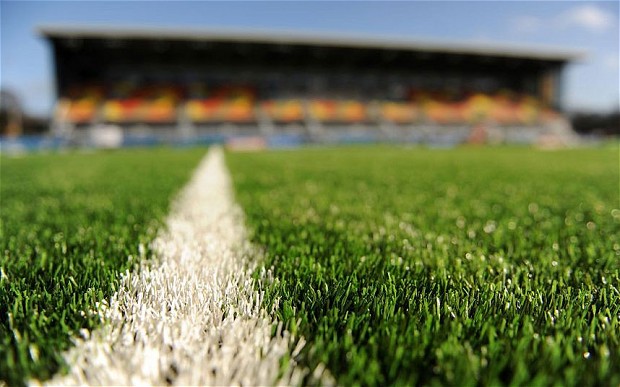
The switch has already started with Woollahra Oval, the long-held home of Sydney’s renowned Eastern Suburbs Rugby Club, set to be ripped up after this coming season for a $1.5 million conversion to synthetic grass.
It’s reported to be the first major sporting field in Australia making this transition.
From Woollahra Council’s point of view, it means the ground can be permanently marked for multiple sports, including soccer, and therefore have increased usage and be of greater financial benefit.
This radical change to Woollahra Oval may be the first of its kind to a major playing field in Australia, but Jarryd Hayne is quite used to the synthetic turf of American football fields and it’s reported that five major rugby grounds in the United Kingdom have already made the switch.
While some of Easts officials object strongly to the change, the club’s director of rugby Darren Coleman has backed the all-weather surface, having coached on artificial grass during four years in Japan.
“There have been a couple of new models since I coached on it in Japan and it’s quite impressive; the (grass) is actually longer in some cases than real grass, around 90mm.
“As five of the premiership clubs in England now use synthetic turf, we’re not going it alone.”
An obvious concern is whether synthetic grass would lead to more injuries, as one’s first thought is that anything synthetic would have a different impact on a sliding or falling body.
Coleman says the last thing you want to see as a coach is a spike in injuries, “but the research we’re seeing suggests that’s not the case at all.”
The biggest positive is that the synthetic surface would allow the ground to be used much more than it is.
A report by council staff said the artificial surface could be used 60 hours a week, as opposed to 20 hours currently.
“With the ability to program alternative sports, such as soccer, it will open the facility up to a whole new demographic,” the report said.
It also means that matches and training would not be washed out for long periods after heavy rainstorms, when normally they might be.
All things considered, it’s easy to see other councils following Woollahra Council’s lead when it all adds up to an increased revenue flow from their grounds.
Only time will tell the impact this will have on our rugby pitches as we know them.
But nothing has occurred in our game in recent times quite like this and the assumption is that if this radical change to Woollahra Oval is implemented, with only minor grievances, then many other sporting fields around Australia won’t need further watering or mowing or regular line marking.
Just how are these synthetic surfaces laid?
In quite a long process, the grass and top soil is replaced with a layer of rock, which is covered by a 20ml “elastic” layer of crushed truck tyres. The artificial grass is then laid on top and filled in, firstly with a layer of sand, then a layer of rubber granules.
And the next step? Give away the lawnmower.